Fewer workers to support greater number of retirees
Published:
30 March 2003 y., Sunday
When Secretary of Defense Donald H. Rumsfeld recently disparaged France and Germany as "Old Europe," maybe he was speaking demographically.
According to a new study of the European Union's 15 member nations, governments there are facing an age problem that is almost certain to get worse. European families are having fewer children, and are exacerbating the problem by delaying child-bearing.
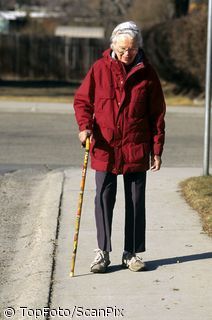
As a result, the research team said, Europeans face higher health and welfare costs, fewer wage-earners, and an impact on national productivity. In other words, a downward spiral has begun, and soon fewer young workers will be supporting more and more old retirees.
Although their calculations predict a slight population rise over the next 15 years - the result of a "baby boom" in the 1960s - the researchers see Europe having 88 million fewer people when the year 2100 rolls around, down from about 230 million.
One of the researchers, Brian O'Neill at Brown University in Providence, R.I., said the data show "there are fewer children today than there are parents" in the European Union. "So we know the number of parents one generation in the future is going to be even smaller.
"Then there is the additional factor of delay," which accounts for about 40 percent of the expected decline, he said.
Europe has about four working-age persons for every elderly person, the researchers said. But they predict that there "will be considerably less than three" workers per retiree for most of this century, even if young families begin having children sooner.
Šaltinis:
The Sun
Copying, publishing, announcing any information from the News.lt portal without written permission of News.lt editorial office is prohibited.
The most popular articles
 Getting on their glad rags, pensioners in the India capital New Delhi stepped out on to the to strut their stuff.
more »
Getting on their glad rags, pensioners in the India capital New Delhi stepped out on to the to strut their stuff.
more »
 Attempt to reach agreement over the working time directive - which limits workers to 48 hours including overtime - broke down late Monday night (27 April) as MEPs and EU Ministers failed to agree.
more »
Attempt to reach agreement over the working time directive - which limits workers to 48 hours including overtime - broke down late Monday night (27 April) as MEPs and EU Ministers failed to agree.
more »
 She has only been on the job for 100 days, but First Lady Michelle Obama has managed to dazzle the public.
more »
She has only been on the job for 100 days, but First Lady Michelle Obama has managed to dazzle the public.
more »
 Across Europe the amount of time new mums can have off after the birth of their child varies from 14 to 52 weeks.
more »
Across Europe the amount of time new mums can have off after the birth of their child varies from 14 to 52 weeks.
more »
 The note was written by prisoners at the Nazis' Auschwitz death camp during World War Two and stuffed into a bottle.
more »
The note was written by prisoners at the Nazis' Auschwitz death camp during World War Two and stuffed into a bottle.
more »
 Spectators at a Kentucky race course were left shocked after an horrific crash involving a rider-less horse.
more »
Spectators at a Kentucky race course were left shocked after an horrific crash involving a rider-less horse.
more »
 As a family in Mexico mourned the death of the latest suspected victim of the swine flu, the deadly virus pushed its way into New Zealand and Israel.
more »
As a family in Mexico mourned the death of the latest suspected victim of the swine flu, the deadly virus pushed its way into New Zealand and Israel.
more »
 For the seventh time in a row spring will not be only a season of blossoming flowers but also a time when students all over the world can get to know more about the European Union.
more »
For the seventh time in a row spring will not be only a season of blossoming flowers but also a time when students all over the world can get to know more about the European Union.
more »
 Traditional Hungarian herdsmen don the clothes of an age gone by as they mark the start of the summer season by parading their flocks.
more »
Traditional Hungarian herdsmen don the clothes of an age gone by as they mark the start of the summer season by parading their flocks.
more »
 The jobless rate is rising faster among the young, underscoring the need for a new long-term strategy to address their plight.
more »
The jobless rate is rising faster among the young, underscoring the need for a new long-term strategy to address their plight.
more »