Fewer workers to support greater number of retirees
Published:
30 March 2003 y., Sunday
When Secretary of Defense Donald H. Rumsfeld recently disparaged France and Germany as "Old Europe," maybe he was speaking demographically.
According to a new study of the European Union's 15 member nations, governments there are facing an age problem that is almost certain to get worse. European families are having fewer children, and are exacerbating the problem by delaying child-bearing.
As a result, the research team said, Europeans face higher health and welfare costs, fewer wage-earners, and an impact on national productivity. In other words, a downward spiral has begun, and soon fewer young workers will be supporting more and more old retirees.
Although their calculations predict a slight population rise over the next 15 years - the result of a "baby boom" in the 1960s - the researchers see Europe having 88 million fewer people when the year 2100 rolls around, down from about 230 million.
One of the researchers, Brian O'Neill at Brown University in Providence, R.I., said the data show "there are fewer children today than there are parents" in the European Union. "So we know the number of parents one generation in the future is going to be even smaller.
"Then there is the additional factor of delay," which accounts for about 40 percent of the expected decline, he said.
Europe has about four working-age persons for every elderly person, the researchers said. But they predict that there "will be considerably less than three" workers per retiree for most of this century, even if young families begin having children sooner.
Šaltinis:
The Sun
Copying, publishing, announcing any information from the News.lt portal without written permission of News.lt editorial office is prohibited.
The most popular articles
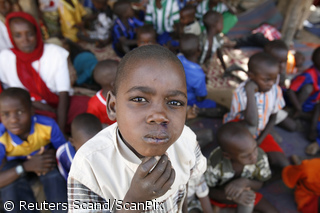 The fact that over 80% of the world's children live in the developing world with a poor quality of life is the reason Europe “should take positive action”, according to Glenys Kinnock.
more »
The fact that over 80% of the world's children live in the developing world with a poor quality of life is the reason Europe “should take positive action”, according to Glenys Kinnock.
more »
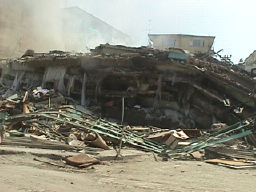 Houses collapse on the outskirts of La Paz Bolivia.
more »
Houses collapse on the outskirts of La Paz Bolivia.
more »
 In a remote corner of Siberia children with disabilities are being offered a helping paw.
more »
In a remote corner of Siberia children with disabilities are being offered a helping paw.
more »
 In Hungary every February The Buso men march through the streets hoping their efforts will help usher in the spring.
more »
In Hungary every February The Buso men march through the streets hoping their efforts will help usher in the spring.
more »
 Besides fostering dialogues among the world's most influential chefs, the event also is aimed at promoting Japanese food culture to the world.
more »
Besides fostering dialogues among the world's most influential chefs, the event also is aimed at promoting Japanese food culture to the world.
more »
 A new trend in fake fashion is taking China by storm.
more »
A new trend in fake fashion is taking China by storm.
more »
 When it comes to social protection, the EU has some of the strongest laws on the books.
more »
When it comes to social protection, the EU has some of the strongest laws on the books.
more »
 The Taj Mahal is under threat - a series of cracks have appeared in the walls of the structure.
more »
The Taj Mahal is under threat - a series of cracks have appeared in the walls of the structure.
more »
 French and Danish journalists share first prize in the 2008 journalist award "For diversity, against discrimination".
more »
French and Danish journalists share first prize in the 2008 journalist award "For diversity, against discrimination".
more »
 Rallies can be used to pump up people's enthusiasm for all kinds of things but here in Japan schools and colleges are drafting in teams of cheerleaders to boost enthusiasm among students about to enter the jobs market.
more »
Rallies can be used to pump up people's enthusiasm for all kinds of things but here in Japan schools and colleges are drafting in teams of cheerleaders to boost enthusiasm among students about to enter the jobs market.
more »