The newly formed Russian Baltic Party of Estonia plans to create Estonia's first Baltic Russian history museum next fall as part of its platform to improve life for Estonia's Russian minorities, said party board member Viktor Lanberg.
Published:
21 July 2000 y., Friday
RBPE formed last June as a splinter of the Russian-speaking People's Trust party. One of its major cultural projects includes a museum intended to preserve Russian culture in the Baltics and improve attitudes toward ethnic Russians living in Estonia, Lanberg said.
Lanberg said he hopes the museum, which will be housed in Tallinn, will help raise awareness that Russians were contributing members of the Baltics long before the great influx of Soviet Russians led to tensions between the two cultures.
"It is politically not fair, and historically not right to think that the history of Russians in the Baltics started in the 1940s," said Lanberg, adding that Russian immigrant groups were important contributors to Estonian culture as far back as the 13th century - long before Soviet Russification policies
increased the Russian population of Estonia to nearly 40 percent.
Lanberg said the party, which now has 800 members, will try to find funding for the museum from next year's budget. If Parliament approves the funding, the museum will house historical documents, photos and artifacts from as far back as the 13th century.
Much of the museum's content will be contributed by archivist Alexander Dormidontov, whose photo collection of Baltic-Russian culture has traveled throughout Estonia and was on display at Parliament last spring.
Dormidontov, who will be a permanent board member of the museum, said he wanted to find a better way to preserve what he and others have collected as well as give ethnic Estonians and Russians another perspective on the country's history.
Šaltinis:
The Baltic Times
Copying, publishing, announcing any information from the News.lt portal without written permission of News.lt editorial office is prohibited.
The most popular articles
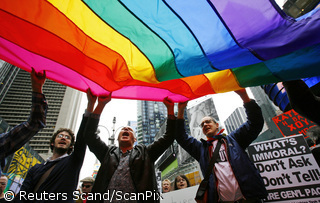 Tiwonge Chimbalanga and Steven Monjeza are married, but in Malawi homosexuality is banned.
more »
Tiwonge Chimbalanga and Steven Monjeza are married, but in Malawi homosexuality is banned.
more »
 The World Bank today launched the fourth book in the critically acclaimed Moving Out of Poverty series, which provides bottom up perspectives on poverty and local realities by over 60,000 people living in 500 communities in 15 countries.
more »
The World Bank today launched the fourth book in the critically acclaimed Moving Out of Poverty series, which provides bottom up perspectives on poverty and local realities by over 60,000 people living in 500 communities in 15 countries.
more »
 Ten years ago, European leaders pledged to end poverty in the EU by 2010. As this deadline approaches, the goal is still some way off.
more »
Ten years ago, European leaders pledged to end poverty in the EU by 2010. As this deadline approaches, the goal is still some way off.
more »
 For many 2009 will be a historic year with the coming into force of the Lisbon Treaty, the outcome of the Copenhagen summit and the inauguration of the first black US president.
more »
For many 2009 will be a historic year with the coming into force of the Lisbon Treaty, the outcome of the Copenhagen summit and the inauguration of the first black US president.
more »
 Not answering the phone, celebrating Hogmanay and reading Dickens' Christmas Carol are just three seasonal traditions that MEPs shared with us.
more »
Not answering the phone, celebrating Hogmanay and reading Dickens' Christmas Carol are just three seasonal traditions that MEPs shared with us.
more »
 More and more people make their homes and own property in EU countries other than the one in which they hold citizenship.
more »
More and more people make their homes and own property in EU countries other than the one in which they hold citizenship.
more »
 European Parliament President Jerzy Buzek has made an televised Christmas and New Year address to European citizens, looking ahead to the challenges of the coming year.
more »
European Parliament President Jerzy Buzek has made an televised Christmas and New Year address to European citizens, looking ahead to the challenges of the coming year.
more »
 Lithuania takes the 1st position in the EU by the number of students in the country.
more »
Lithuania takes the 1st position in the EU by the number of students in the country.
more »
 Sergei Kovalev, former political prisoner turned activist for Russian human rights group Memorial gave an emotional and heartfelt address to the European Parliament on Wednesday 16 December.
more »
Sergei Kovalev, former political prisoner turned activist for Russian human rights group Memorial gave an emotional and heartfelt address to the European Parliament on Wednesday 16 December.
more »
 Strengthened passenger rights for travel by bus are an important item on the agenda when the Transport, Telecommunications and Energy Council (TTE) meets on 17–18 December.
more »
Strengthened passenger rights for travel by bus are an important item on the agenda when the Transport, Telecommunications and Energy Council (TTE) meets on 17–18 December.
more »