The newly formed Russian Baltic Party of Estonia plans to create Estonia's first Baltic Russian history museum next fall as part of its platform to improve life for Estonia's Russian minorities, said party board member Viktor Lanberg.
Published:
21 July 2000 y., Friday
RBPE formed last June as a splinter of the Russian-speaking People's Trust party. One of its major cultural projects includes a museum intended to preserve Russian culture in the Baltics and improve attitudes toward ethnic Russians living in Estonia, Lanberg said.
Lanberg said he hopes the museum, which will be housed in Tallinn, will help raise awareness that Russians were contributing members of the Baltics long before the great influx of Soviet Russians led to tensions between the two cultures.
"It is politically not fair, and historically not right to think that the history of Russians in the Baltics started in the 1940s," said Lanberg, adding that Russian immigrant groups were important contributors to Estonian culture as far back as the 13th century - long before Soviet Russification policies
increased the Russian population of Estonia to nearly 40 percent.
Lanberg said the party, which now has 800 members, will try to find funding for the museum from next year's budget. If Parliament approves the funding, the museum will house historical documents, photos and artifacts from as far back as the 13th century.
Much of the museum's content will be contributed by archivist Alexander Dormidontov, whose photo collection of Baltic-Russian culture has traveled throughout Estonia and was on display at Parliament last spring.
Dormidontov, who will be a permanent board member of the museum, said he wanted to find a better way to preserve what he and others have collected as well as give ethnic Estonians and Russians another perspective on the country's history.
Šaltinis:
The Baltic Times
Copying, publishing, announcing any information from the News.lt portal without written permission of News.lt editorial office is prohibited.
The most popular articles
 On 15 October, the President of the EP unveiled the names of the winners of the EP Prize for Journalism 2009.
more »
On 15 October, the President of the EP unveiled the names of the winners of the EP Prize for Journalism 2009.
more »
 “Lisbon treaty” - you may have heard quite a bit about it recently. Still baffled?
more »
“Lisbon treaty” - you may have heard quite a bit about it recently. Still baffled?
more »
 The 2009 World Food Day on 16 October is marked by an EU stronger than ever in its commitment to improve access to food around the world.
more »
The 2009 World Food Day on 16 October is marked by an EU stronger than ever in its commitment to improve access to food around the world.
more »
 One of the first signs of the new political mood in the European Parliament after the election is the reversal of its position over rules on working times for lorry drivers.
more »
One of the first signs of the new political mood in the European Parliament after the election is the reversal of its position over rules on working times for lorry drivers.
more »
 Do you feel like doing a 5-month traineeship in the European Parliament? If so then Thursday 15 October is the deadline to apply.
more »
Do you feel like doing a 5-month traineeship in the European Parliament? If so then Thursday 15 October is the deadline to apply.
more »
 The European Commission has provided € 32 million in assistance to 22 African Caribbean and Pacific (ACP) countries 1 over a period of 6 years to help fight poverty and to increase access to and quality of sexual and reproductive health services and commodities.
more »
The European Commission has provided € 32 million in assistance to 22 African Caribbean and Pacific (ACP) countries 1 over a period of 6 years to help fight poverty and to increase access to and quality of sexual and reproductive health services and commodities.
more »
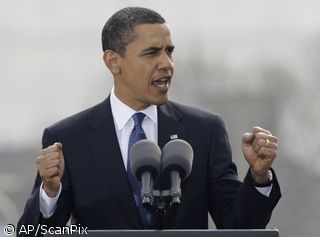 Challenging a long-standing taboo, U.S. President Barack Obama made a pledge to end restrictions on gays in the U.S. military.
more »
Challenging a long-standing taboo, U.S. President Barack Obama made a pledge to end restrictions on gays in the U.S. military.
more »
 The economic crisis has pushed an extra 90 million people into extreme poverty in the developing world and made 23 million people unemployed.
more »
The economic crisis has pushed an extra 90 million people into extreme poverty in the developing world and made 23 million people unemployed.
more »
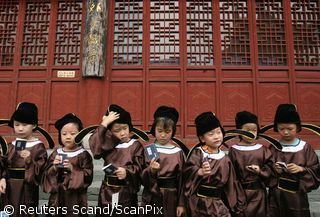 In the Chinese capital where the nation's one-child limit is rigidly enforced twins, triplets and quads get together to celebrate the fact they have brothers and sisters.
more »
In the Chinese capital where the nation's one-child limit is rigidly enforced twins, triplets and quads get together to celebrate the fact they have brothers and sisters.
more »
 It's called the Brompton folding bike world championships but it really is an awfully British affair.
more »
It's called the Brompton folding bike world championships but it really is an awfully British affair.
more »