Tuesday unity celebrations mark country_s troubled century.
Published:
8 November 1999 y., Monday
It is indicative of today_s Germany that 10 years after the collapse of a divide that separated individual German families, towns and even two enemy German nations for three decades - celebrations marking the historical fall of the Wall on Tuesday will be low-key. The government is making Tuesday_s anniversary reflective - with wreath laying, commemoration ceremonies and speeches. There are no fireworks, though there will be an "illumination" - tracing a ring around Brandenburg Gate where the Berlin Wall stood for 28 grim years. There is no obvious opportunity for that unbridled German cheer still reserved for the likes of the annual Oktoberfest beer festivals. One reason for the subdued approach to this 10th anniversary is the sheer magnitude of the event. There is also a desire, on the part of the German authorities, to remember those who died trying to escape to freedom from the Communist east, as well to fete a unified, free Germany. But, there is another reason, in fact, there are millions of reasons, personified by Gerhard Kompish, a machine-shop foreman in his 40s from East Berlin and other "Ossies" like him who, 10 years after their police state fell with the Wall, remain bitter, frustrated, and impoverished.
When NBC News interviewed Kompish 10 years ago, he was already worried. The Wall had just fallen, and many of his metal workers had abandoned his workshop to seek more lucrative employment in the West. Kompish welcomed reunification, but feared the economic turmoil that lay ahead. Today, the chief machinist says the German "dream of unification" has become a nightmare. Rents are high, forcing many businesses to go bust. Facing bankruptcy himself, Kompish has moved his shop to Berlin_s tattered outskirts. The business now survives on a shoestring.
Copying, publishing, announcing any information from the News.lt portal without written permission of News.lt editorial office is prohibited.
The most popular articles
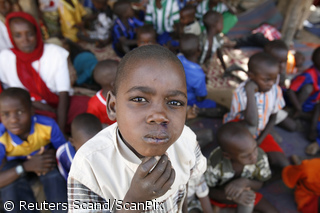 The fact that over 80% of the world's children live in the developing world with a poor quality of life is the reason Europe “should take positive action”, according to Glenys Kinnock.
more »
The fact that over 80% of the world's children live in the developing world with a poor quality of life is the reason Europe “should take positive action”, according to Glenys Kinnock.
more »
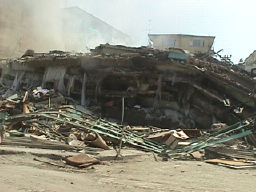 Houses collapse on the outskirts of La Paz Bolivia.
more »
Houses collapse on the outskirts of La Paz Bolivia.
more »
 In a remote corner of Siberia children with disabilities are being offered a helping paw.
more »
In a remote corner of Siberia children with disabilities are being offered a helping paw.
more »
 In Hungary every February The Buso men march through the streets hoping their efforts will help usher in the spring.
more »
In Hungary every February The Buso men march through the streets hoping their efforts will help usher in the spring.
more »
 Besides fostering dialogues among the world's most influential chefs, the event also is aimed at promoting Japanese food culture to the world.
more »
Besides fostering dialogues among the world's most influential chefs, the event also is aimed at promoting Japanese food culture to the world.
more »
 A new trend in fake fashion is taking China by storm.
more »
A new trend in fake fashion is taking China by storm.
more »
 When it comes to social protection, the EU has some of the strongest laws on the books.
more »
When it comes to social protection, the EU has some of the strongest laws on the books.
more »
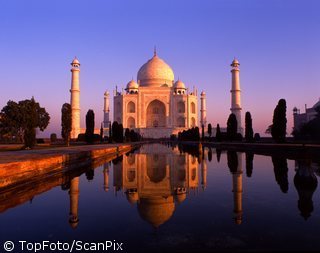 The Taj Mahal is under threat - a series of cracks have appeared in the walls of the structure.
more »
The Taj Mahal is under threat - a series of cracks have appeared in the walls of the structure.
more »
 French and Danish journalists share first prize in the 2008 journalist award "For diversity, against discrimination".
more »
French and Danish journalists share first prize in the 2008 journalist award "For diversity, against discrimination".
more »
 Rallies can be used to pump up people's enthusiasm for all kinds of things but here in Japan schools and colleges are drafting in teams of cheerleaders to boost enthusiasm among students about to enter the jobs market.
more »
Rallies can be used to pump up people's enthusiasm for all kinds of things but here in Japan schools and colleges are drafting in teams of cheerleaders to boost enthusiasm among students about to enter the jobs market.
more »