Tuesday unity celebrations mark country_s troubled century.
Published:
8 November 1999 y., Monday
It is indicative of today_s Germany that 10 years after the collapse of a divide that separated individual German families, towns and even two enemy German nations for three decades - celebrations marking the historical fall of the Wall on Tuesday will be low-key. The government is making Tuesday_s anniversary reflective - with wreath laying, commemoration ceremonies and speeches. There are no fireworks, though there will be an "illumination" - tracing a ring around Brandenburg Gate where the Berlin Wall stood for 28 grim years. There is no obvious opportunity for that unbridled German cheer still reserved for the likes of the annual Oktoberfest beer festivals. One reason for the subdued approach to this 10th anniversary is the sheer magnitude of the event. There is also a desire, on the part of the German authorities, to remember those who died trying to escape to freedom from the Communist east, as well to fete a unified, free Germany. But, there is another reason, in fact, there are millions of reasons, personified by Gerhard Kompish, a machine-shop foreman in his 40s from East Berlin and other "Ossies" like him who, 10 years after their police state fell with the Wall, remain bitter, frustrated, and impoverished.
When NBC News interviewed Kompish 10 years ago, he was already worried. The Wall had just fallen, and many of his metal workers had abandoned his workshop to seek more lucrative employment in the West. Kompish welcomed reunification, but feared the economic turmoil that lay ahead. Today, the chief machinist says the German "dream of unification" has become a nightmare. Rents are high, forcing many businesses to go bust. Facing bankruptcy himself, Kompish has moved his shop to Berlin_s tattered outskirts. The business now survives on a shoestring.
Copying, publishing, announcing any information from the News.lt portal without written permission of News.lt editorial office is prohibited.
The most popular articles
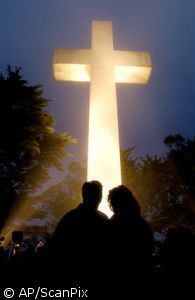 A famous New York church is feeling Wall Street's pain.
more »
A famous New York church is feeling Wall Street's pain.
more »
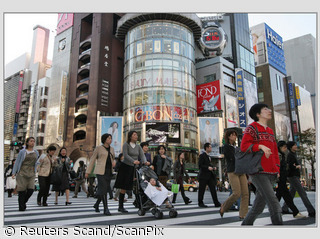 Japan may be in recession, but Tokyo remains the world's best dining city.
more »
Japan may be in recession, but Tokyo remains the world's best dining city.
more »
 The Netherlands may be famous for its liberal drugs laws but in the Dutch town of Bergen Op Zoom they've had enough.
more »
The Netherlands may be famous for its liberal drugs laws but in the Dutch town of Bergen Op Zoom they've had enough.
more »
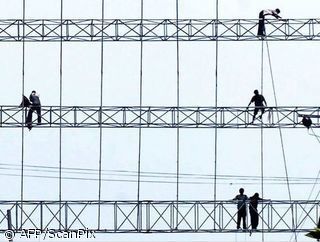 A European Commission report published today shows that mobile workers from the countries that joined the EU in 2004 and 2007 have had a positive impact on Member States' economies and have not led to serious disturbances on their labour markets.
more »
A European Commission report published today shows that mobile workers from the countries that joined the EU in 2004 and 2007 have had a positive impact on Member States' economies and have not led to serious disturbances on their labour markets.
more »
 South Korean stores must by law charge shoppers for plastic bags. Any infrigement would be reported to the authorities.
more »
South Korean stores must by law charge shoppers for plastic bags. Any infrigement would be reported to the authorities.
more »
 Shi Sanba is one of China's most celebrated plastic surgeon's and also dubbed the country's "Michael Jackson".
more »
Shi Sanba is one of China's most celebrated plastic surgeon's and also dubbed the country's "Michael Jackson".
more »
 The job of elected Members of any Parliament is to make laws that all of us are obliged to obey.
more »
The job of elected Members of any Parliament is to make laws that all of us are obliged to obey.
more »
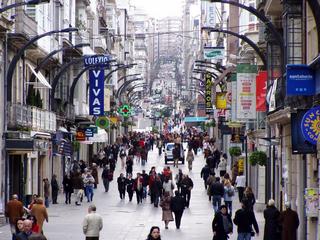 In Spain thousands have been queuing for days in the hope of gaining that crucial first step onto the property ladder.
more »
In Spain thousands have been queuing for days in the hope of gaining that crucial first step onto the property ladder.
more »
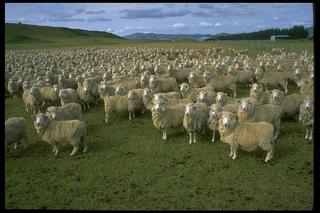 Scores of sheep have been shepherded through Paris as part of a demonstration to improve the lives of European farmers.
more »
Scores of sheep have been shepherded through Paris as part of a demonstration to improve the lives of European farmers.
more »
 Animal rights groups say animals are suffering from abuse and sometimes live in dire conditions.
more »
Animal rights groups say animals are suffering from abuse and sometimes live in dire conditions.
more »