Faced with a 2004 deadline, Latvia's government must decide what to do with thousands of secret police files left over from Soviet rule of the Baltic country
Published:
12 July 2003 y., Saturday
Since regaining independence in the 1991 Soviet collapse, the country of 2.4 million has grappled with its Communist past and what to do with thousands of KGB documents that are a record of decades of secret police activity.
Some want the 4,000 KGB files opened for public view, citing their historical importance, while others want them destroyed, fearful of the secrets they contain. The KGB took the bulk of the files with them when they pulled out of Latvia in 1991. Those that remain are just a fraction of the total.
If the deadline passes without a decision, the files will remain locked up -- closed to all but prosecutors investigating specific crimes and to individuals who want to see their own files. The files could no longer be used to run background checks on public figures or job applicants.
"Let's put the information on the table and get rid of the speculation," ex-Latvian Prime Minister Guntars Krasts told The Associated Press. "We can't live with keeping it in the dark and some people speculating over who is and isn't in there."
While giving the public access could clear those who are rumored to have worked for the KGB during Soviet rule, it could also mean others might be wrongly tainted.
Former Latvian President Guntis Ulmanis said the files should be destroyed, arguing that the KGB was known to forge documents in a bid to smear public figures.
The files have typically been used to run background checks on people seeking public office or a job in law enforcement. Any use of the documents was done through the state-run Center for the Documentation of the Consequences of Totalitarianism.
If someone is found to have had connections to the KGB, they can't be hired.
Indulis Zalite, who oversees the storage of the files and one of the few with unfettered access to them, said destroying them would be a mistake, but so would opening them up, too.
Šaltinis:
newsday.com
Copying, publishing, announcing any information from the News.lt portal without written permission of News.lt editorial office is prohibited.
The most popular articles
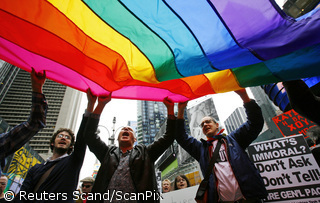 Tiwonge Chimbalanga and Steven Monjeza are married, but in Malawi homosexuality is banned.
more »
Tiwonge Chimbalanga and Steven Monjeza are married, but in Malawi homosexuality is banned.
more »
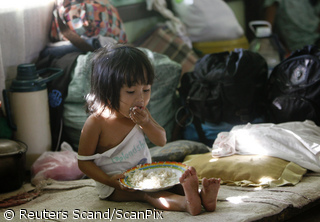 The World Bank today launched the fourth book in the critically acclaimed Moving Out of Poverty series, which provides bottom up perspectives on poverty and local realities by over 60,000 people living in 500 communities in 15 countries.
more »
The World Bank today launched the fourth book in the critically acclaimed Moving Out of Poverty series, which provides bottom up perspectives on poverty and local realities by over 60,000 people living in 500 communities in 15 countries.
more »
 Ten years ago, European leaders pledged to end poverty in the EU by 2010. As this deadline approaches, the goal is still some way off.
more »
Ten years ago, European leaders pledged to end poverty in the EU by 2010. As this deadline approaches, the goal is still some way off.
more »
 For many 2009 will be a historic year with the coming into force of the Lisbon Treaty, the outcome of the Copenhagen summit and the inauguration of the first black US president.
more »
For many 2009 will be a historic year with the coming into force of the Lisbon Treaty, the outcome of the Copenhagen summit and the inauguration of the first black US president.
more »
 Not answering the phone, celebrating Hogmanay and reading Dickens' Christmas Carol are just three seasonal traditions that MEPs shared with us.
more »
Not answering the phone, celebrating Hogmanay and reading Dickens' Christmas Carol are just three seasonal traditions that MEPs shared with us.
more »
 More and more people make their homes and own property in EU countries other than the one in which they hold citizenship.
more »
More and more people make their homes and own property in EU countries other than the one in which they hold citizenship.
more »
 European Parliament President Jerzy Buzek has made an televised Christmas and New Year address to European citizens, looking ahead to the challenges of the coming year.
more »
European Parliament President Jerzy Buzek has made an televised Christmas and New Year address to European citizens, looking ahead to the challenges of the coming year.
more »
 Lithuania takes the 1st position in the EU by the number of students in the country.
more »
Lithuania takes the 1st position in the EU by the number of students in the country.
more »
 Sergei Kovalev, former political prisoner turned activist for Russian human rights group Memorial gave an emotional and heartfelt address to the European Parliament on Wednesday 16 December.
more »
Sergei Kovalev, former political prisoner turned activist for Russian human rights group Memorial gave an emotional and heartfelt address to the European Parliament on Wednesday 16 December.
more »
 Strengthened passenger rights for travel by bus are an important item on the agenda when the Transport, Telecommunications and Energy Council (TTE) meets on 17–18 December.
more »
Strengthened passenger rights for travel by bus are an important item on the agenda when the Transport, Telecommunications and Energy Council (TTE) meets on 17–18 December.
more »