Faced with a 2004 deadline, Latvia's government must decide what to do with thousands of secret police files left over from Soviet rule of the Baltic country
Published:
12 July 2003 y., Saturday
Since regaining independence in the 1991 Soviet collapse, the country of 2.4 million has grappled with its Communist past and what to do with thousands of KGB documents that are a record of decades of secret police activity.
Some want the 4,000 KGB files opened for public view, citing their historical importance, while others want them destroyed, fearful of the secrets they contain. The KGB took the bulk of the files with them when they pulled out of Latvia in 1991. Those that remain are just a fraction of the total.
If the deadline passes without a decision, the files will remain locked up -- closed to all but prosecutors investigating specific crimes and to individuals who want to see their own files. The files could no longer be used to run background checks on public figures or job applicants.
"Let's put the information on the table and get rid of the speculation," ex-Latvian Prime Minister Guntars Krasts told The Associated Press. "We can't live with keeping it in the dark and some people speculating over who is and isn't in there."
While giving the public access could clear those who are rumored to have worked for the KGB during Soviet rule, it could also mean others might be wrongly tainted.
Former Latvian President Guntis Ulmanis said the files should be destroyed, arguing that the KGB was known to forge documents in a bid to smear public figures.
The files have typically been used to run background checks on people seeking public office or a job in law enforcement. Any use of the documents was done through the state-run Center for the Documentation of the Consequences of Totalitarianism.
If someone is found to have had connections to the KGB, they can't be hired.
Indulis Zalite, who oversees the storage of the files and one of the few with unfettered access to them, said destroying them would be a mistake, but so would opening them up, too.
Šaltinis:
newsday.com
Copying, publishing, announcing any information from the News.lt portal without written permission of News.lt editorial office is prohibited.
The most popular articles
 You can now access books, journals, films, maps etc from across Europe via the EU's online library, Europeana.
more »
You can now access books, journals, films, maps etc from across Europe via the EU's online library, Europeana.
more »
 Late night chat turned serious when comedian David Letterman admitted he had sex with female employees and was being blackmailed for $2-million (USD) over the affairs.
more »
Late night chat turned serious when comedian David Letterman admitted he had sex with female employees and was being blackmailed for $2-million (USD) over the affairs.
more »
 Last Thursday (1 October) saw an agreement that will lead to the introduction of more efficient tyres for cars and lorries that will cut fuel bills and CO2 emissions.
more »
Last Thursday (1 October) saw an agreement that will lead to the introduction of more efficient tyres for cars and lorries that will cut fuel bills and CO2 emissions.
more »
 The European Job Days are taking place around the EU over the next fortnight, with a centrepiece event in Brussels on 3 October.
more »
The European Job Days are taking place around the EU over the next fortnight, with a centrepiece event in Brussels on 3 October.
more »
 Women, especially migrant and/or poor women, have been harder hit by the financial crisis than men, MEPs heard on Wednesday.
more »
Women, especially migrant and/or poor women, have been harder hit by the financial crisis than men, MEPs heard on Wednesday.
more »
 New EU plan to make local transport efficient and sustainable.
more »
New EU plan to make local transport efficient and sustainable.
more »
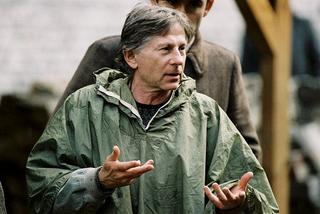 Hollywood heavyweights and European cultural figures are rallying behind jailed film director Roman Polanski.
more »
Hollywood heavyweights and European cultural figures are rallying behind jailed film director Roman Polanski.
more »
 By the time of his death in the Moscow winter 20 years ago, Andrei Sakharov had built an international reputation as a nuclear physicist, human rights activist and Nobel Peace Prize winner His fears over the implications of his work led him to call for peaceful coexistence and later for human rights in the USSR.
more »
By the time of his death in the Moscow winter 20 years ago, Andrei Sakharov had built an international reputation as a nuclear physicist, human rights activist and Nobel Peace Prize winner His fears over the implications of his work led him to call for peaceful coexistence and later for human rights in the USSR.
more »
 The ten nominations for this year's Sakharov Prize, the EP's prize for defenders of human rights and democracy, have now been put forward and will be officially presented at the end of the month.
more »
The ten nominations for this year's Sakharov Prize, the EP's prize for defenders of human rights and democracy, have now been put forward and will be officially presented at the end of the month.
more »
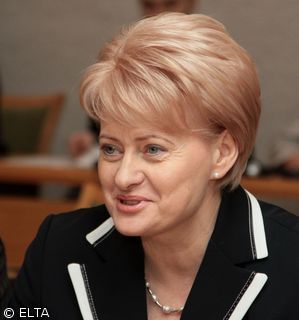 President of the Republic of Lithuania Dalia Grybauskaitė attended a meeting hosted by the President of Liberia Ellen Johnson-Sirleaf and the President of Finland Tarja Halonen on Peace and Security through Women's Leadership.
more »
President of the Republic of Lithuania Dalia Grybauskaitė attended a meeting hosted by the President of Liberia Ellen Johnson-Sirleaf and the President of Finland Tarja Halonen on Peace and Security through Women's Leadership.
more »