Faced with a 2004 deadline, Latvia's government must decide what to do with thousands of secret police files left over from Soviet rule of the Baltic country
Published:
12 July 2003 y., Saturday
Since regaining independence in the 1991 Soviet collapse, the country of 2.4 million has grappled with its Communist past and what to do with thousands of KGB documents that are a record of decades of secret police activity.
Some want the 4,000 KGB files opened for public view, citing their historical importance, while others want them destroyed, fearful of the secrets they contain. The KGB took the bulk of the files with them when they pulled out of Latvia in 1991. Those that remain are just a fraction of the total.
If the deadline passes without a decision, the files will remain locked up -- closed to all but prosecutors investigating specific crimes and to individuals who want to see their own files. The files could no longer be used to run background checks on public figures or job applicants.
"Let's put the information on the table and get rid of the speculation," ex-Latvian Prime Minister Guntars Krasts told The Associated Press. "We can't live with keeping it in the dark and some people speculating over who is and isn't in there."
While giving the public access could clear those who are rumored to have worked for the KGB during Soviet rule, it could also mean others might be wrongly tainted.
Former Latvian President Guntis Ulmanis said the files should be destroyed, arguing that the KGB was known to forge documents in a bid to smear public figures.
The files have typically been used to run background checks on people seeking public office or a job in law enforcement. Any use of the documents was done through the state-run Center for the Documentation of the Consequences of Totalitarianism.
If someone is found to have had connections to the KGB, they can't be hired.
Indulis Zalite, who oversees the storage of the files and one of the few with unfettered access to them, said destroying them would be a mistake, but so would opening them up, too.
Šaltinis:
newsday.com
Copying, publishing, announcing any information from the News.lt portal without written permission of News.lt editorial office is prohibited.
The most popular articles
 Campaign for green transport underscores key role of cities in fighting global warming.
more »
Campaign for green transport underscores key role of cities in fighting global warming.
more »
 The EP has called for a rapid release of EU aid funds to help victims of this summer's devastating forest fires in Southern Europe, especially in Greece.
more »
The EP has called for a rapid release of EU aid funds to help victims of this summer's devastating forest fires in Southern Europe, especially in Greece.
more »
 Taking into account changes on domestic and international money markets AB DnB NORD Bankas, a member of international financial group shall change individual and corporate time deposit rates from September 14th.
more »
Taking into account changes on domestic and international money markets AB DnB NORD Bankas, a member of international financial group shall change individual and corporate time deposit rates from September 14th.
more »
 The World Bank today approved a US$75 million IDA credit to Sri Lanka, which will support the second phase of a community driven development program that has touched the lives of nearly one million poor Sri Lankans in the three provinces of Uva, Southern, and Sabaragamuwa.
more »
The World Bank today approved a US$75 million IDA credit to Sri Lanka, which will support the second phase of a community driven development program that has touched the lives of nearly one million poor Sri Lankans in the three provinces of Uva, Southern, and Sabaragamuwa.
more »
 The lights went out on the traditional 100 watt bulb on 1 September as new EU rules on energy efficiency kicked in.
more »
The lights went out on the traditional 100 watt bulb on 1 September as new EU rules on energy efficiency kicked in.
more »
 EU seeks new tools for measuring economic performance that give more weight to social and environmental aspects of wellbeing.
more »
EU seeks new tools for measuring economic performance that give more weight to social and environmental aspects of wellbeing.
more »
 Samoa is to become the first nation in nearly 40 years to swap driving on the right side of the road, to the left.
more »
Samoa is to become the first nation in nearly 40 years to swap driving on the right side of the road, to the left.
more »
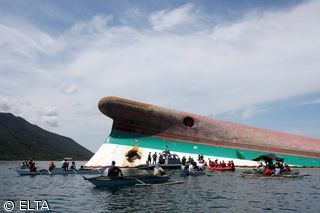 Tales of survival are beginning to emerge among passengers plucked from a sinking ferry off the southern Philippines.
more »
Tales of survival are beginning to emerge among passengers plucked from a sinking ferry off the southern Philippines.
more »
 Taking into account changes on domestic money market AB DnB NORD Bankas, a member of international financial group shall change individual and corporate time deposit rates as of 1st September.
more »
Taking into account changes on domestic money market AB DnB NORD Bankas, a member of international financial group shall change individual and corporate time deposit rates as of 1st September.
more »
 Proposal for programme to coordinate resettlement of refugees at the EU level.
more »
Proposal for programme to coordinate resettlement of refugees at the EU level.
more »