Faced with a 2004 deadline, Latvia's government must decide what to do with thousands of secret police files left over from Soviet rule of the Baltic country
Published:
12 July 2003 y., Saturday
Since regaining independence in the 1991 Soviet collapse, the country of 2.4 million has grappled with its Communist past and what to do with thousands of KGB documents that are a record of decades of secret police activity.
Some want the 4,000 KGB files opened for public view, citing their historical importance, while others want them destroyed, fearful of the secrets they contain. The KGB took the bulk of the files with them when they pulled out of Latvia in 1991. Those that remain are just a fraction of the total.
If the deadline passes without a decision, the files will remain locked up -- closed to all but prosecutors investigating specific crimes and to individuals who want to see their own files. The files could no longer be used to run background checks on public figures or job applicants.
"Let's put the information on the table and get rid of the speculation," ex-Latvian Prime Minister Guntars Krasts told The Associated Press. "We can't live with keeping it in the dark and some people speculating over who is and isn't in there."
While giving the public access could clear those who are rumored to have worked for the KGB during Soviet rule, it could also mean others might be wrongly tainted.
Former Latvian President Guntis Ulmanis said the files should be destroyed, arguing that the KGB was known to forge documents in a bid to smear public figures.
The files have typically been used to run background checks on people seeking public office or a job in law enforcement. Any use of the documents was done through the state-run Center for the Documentation of the Consequences of Totalitarianism.
If someone is found to have had connections to the KGB, they can't be hired.
Indulis Zalite, who oversees the storage of the files and one of the few with unfettered access to them, said destroying them would be a mistake, but so would opening them up, too.
Šaltinis:
newsday.com
Copying, publishing, announcing any information from the News.lt portal without written permission of News.lt editorial office is prohibited.
The most popular articles
 For the last 15 years European citizens living in another European country have been able to vote in that country's local and European elections.
more »
For the last 15 years European citizens living in another European country have been able to vote in that country's local and European elections.
more »
 Zimbabwe is suffering from cholera.
more »
Zimbabwe is suffering from cholera.
more »
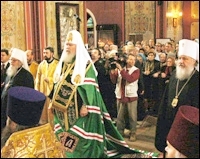 Metropolitan Kirill will head the Russian Orthodox Church temporarily following the death of Patriarch Alexiy II on Friday.
more »
Metropolitan Kirill will head the Russian Orthodox Church temporarily following the death of Patriarch Alexiy II on Friday.
more »
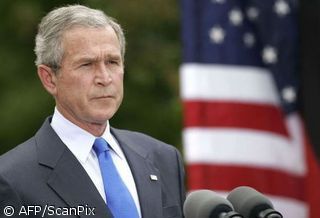 U.S President George W. Bush celebrates his final Christmas in office - the lighting of the National Christmas tree.
more »
U.S President George W. Bush celebrates his final Christmas in office - the lighting of the National Christmas tree.
more »
 Under new draft laws, people travelling by bus and ship would enjoy the same rights as those taking a plane or train, including the right to meals, hotel accommodation and alternative services if the trip is cancelled or interrupted.
more »
Under new draft laws, people travelling by bus and ship would enjoy the same rights as those taking a plane or train, including the right to meals, hotel accommodation and alternative services if the trip is cancelled or interrupted.
more »
 The importance of individual happiness, which can be achieved with the help of universal human values - whether religious or non-religious - was one major theme in an address by the 14th Dalai Lama to the European Parliament on Wednesday.
more »
The importance of individual happiness, which can be achieved with the help of universal human values - whether religious or non-religious - was one major theme in an address by the 14th Dalai Lama to the European Parliament on Wednesday.
more »
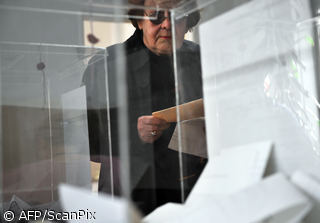 Although the European Parliament is now much more powerful than when it was first directly elected in 1979, voter turnout for elections has declined steadily, reaching a new low in 2004.
more »
Although the European Parliament is now much more powerful than when it was first directly elected in 1979, voter turnout for elections has declined steadily, reaching a new low in 2004.
more »
 The free tours are run by Sandemans New Europe - set up in 2004 by Chris Sandeman, who chose tourism over his family's traditional sherry business.
more »
The free tours are run by Sandemans New Europe - set up in 2004 by Chris Sandeman, who chose tourism over his family's traditional sherry business.
more »
 Eighteen months after it began work, Parliament's Temporary Committee on Climate Change called for an 80% cut in greenhouse gases by 2050, binding interim targets to improve energy efficiency 20% by 2020 and incentives to encourage everyone to do their bit.
more »
Eighteen months after it began work, Parliament's Temporary Committee on Climate Change called for an 80% cut in greenhouse gases by 2050, binding interim targets to improve energy efficiency 20% by 2020 and incentives to encourage everyone to do their bit.
more »
 Israeli experts are using good old mathematical models to give a face in a photo the ideal characteristics in just a few mouse clicks.
more »
Israeli experts are using good old mathematical models to give a face in a photo the ideal characteristics in just a few mouse clicks.
more »