A discussion is under way inside the European Union as to how many years are required before its new members will match the living standards prevailing in the rest of the now 25-nation EU
Published:
12 August 2004 y., Thursday
A discussion is under way inside the European Union as to how many years are required before its new members will match the living standards prevailing in the rest of the now 25-nation EU. Many economists predict that even those new members that have relatively strong economies will require at least 30 years to reach the per-capita income levels prevailing in Western Europe.
Of the new EU members, Slovakia and three Baltic states are generally considered to be the fastest-growing economically. Each of them aspire to match the achievement of one of the oldest members of the EU, Ireland, which in the 1990s registered economic growth rates averaging over eight percent.
Willem Buiter, chief economist at the European Bank for Reconstruction and Development in London, says Ireland is a worthy model for the new EU members.
"Ireland has done it. From being a poor west European country they are now a rich west European country, richer than the average west European country and richer even than Britain," he said. "But they had a number of factors working for them that are not present in Eastern Europe, the main thing being the demographics."
Barbara Boettcher, an economist at Deutsche Bank in Frankfurt, agrees that the Ireland model won't be easy to emulate.
"You won't see that in Eastern Europe," she said. "Eastern European countries, which are designed to be winners are those that have attracted a large share of the production oriented foreign direct investment, like Slovakia, Hungary and the Czech Republic have done."
Šaltinis:
voanews.com
Copying, publishing, announcing any information from the News.lt portal without written permission of News.lt editorial office is prohibited.
The most popular articles
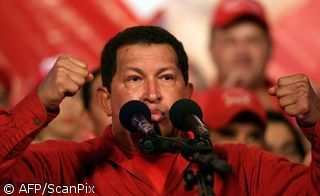 For three days now these group of Venezuelan students have not eaten any food - they're staging a hunger strike against President Hugo Chavez.
more »
For three days now these group of Venezuelan students have not eaten any food - they're staging a hunger strike against President Hugo Chavez.
more »
 Contest challenges young people from Europe and beyond to find creative solutions to real-life problems.EU-sponsored contest challenges young people to think creatively.
more »
Contest challenges young people from Europe and beyond to find creative solutions to real-life problems.EU-sponsored contest challenges young people to think creatively.
more »
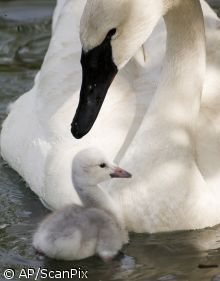 In time-honoured tradition it's time for Hamburg's swans to head to their winter quarters.
more »
In time-honoured tradition it's time for Hamburg's swans to head to their winter quarters.
more »
 On 24 November, Lithuania’s Minister of Foreign Affairs Vygaudas Ušackas will attend the ceremony during which the Ambassador of the People's Republic of China to Lithuania Tong Mingtao will hand over the aid to the residential care centre “Vilties Namai” in Vilnius.
more »
On 24 November, Lithuania’s Minister of Foreign Affairs Vygaudas Ušackas will attend the ceremony during which the Ambassador of the People's Republic of China to Lithuania Tong Mingtao will hand over the aid to the residential care centre “Vilties Namai” in Vilnius.
more »
 If your airline goes bankrupt and leaves you stuck what are your legal rights? Wednesday at midday a crucial vote will be held by MEPs in Strasbourg that could clear the way for the setting up of a compensation fund for stranded passengers.
more »
If your airline goes bankrupt and leaves you stuck what are your legal rights? Wednesday at midday a crucial vote will be held by MEPs in Strasbourg that could clear the way for the setting up of a compensation fund for stranded passengers.
more »
 EU support for volunteering should be stepped up to €10 million, as part of the 2011 European Year of Voluntary Activities Promoting Active Citizenship, said the Education and Culture Committee on Monday evening.
more »
EU support for volunteering should be stepped up to €10 million, as part of the 2011 European Year of Voluntary Activities Promoting Active Citizenship, said the Education and Culture Committee on Monday evening.
more »
 Jacques Barrot and Luc Van den Brande to co-chair conference assessing the implementation of child rights by local and regional authorities.
more »
Jacques Barrot and Luc Van den Brande to co-chair conference assessing the implementation of child rights by local and regional authorities.
more »
 Europeans will soon have a new way of getting the commission to act on issues that concern them. But how will the new citizens’ initiative work in practice?
more »
Europeans will soon have a new way of getting the commission to act on issues that concern them. But how will the new citizens’ initiative work in practice?
more »
 In Ukraine local communities are directly affected by climate change impacts.
more »
In Ukraine local communities are directly affected by climate change impacts.
more »
 Ageism is growing problem – or so most Europeans think.
more »
Ageism is growing problem – or so most Europeans think.
more »