A discussion is under way inside the European Union as to how many years are required before its new members will match the living standards prevailing in the rest of the now 25-nation EU
Published:
12 August 2004 y., Thursday
A discussion is under way inside the European Union as to how many years are required before its new members will match the living standards prevailing in the rest of the now 25-nation EU. Many economists predict that even those new members that have relatively strong economies will require at least 30 years to reach the per-capita income levels prevailing in Western Europe.
Of the new EU members, Slovakia and three Baltic states are generally considered to be the fastest-growing economically. Each of them aspire to match the achievement of one of the oldest members of the EU, Ireland, which in the 1990s registered economic growth rates averaging over eight percent.
Willem Buiter, chief economist at the European Bank for Reconstruction and Development in London, says Ireland is a worthy model for the new EU members.
"Ireland has done it. From being a poor west European country they are now a rich west European country, richer than the average west European country and richer even than Britain," he said. "But they had a number of factors working for them that are not present in Eastern Europe, the main thing being the demographics."
Barbara Boettcher, an economist at Deutsche Bank in Frankfurt, agrees that the Ireland model won't be easy to emulate.
"You won't see that in Eastern Europe," she said. "Eastern European countries, which are designed to be winners are those that have attracted a large share of the production oriented foreign direct investment, like Slovakia, Hungary and the Czech Republic have done."
Šaltinis:
voanews.com
Copying, publishing, announcing any information from the News.lt portal without written permission of News.lt editorial office is prohibited.
The most popular articles
 On 15 October, the President of the EP unveiled the names of the winners of the EP Prize for Journalism 2009.
more »
On 15 October, the President of the EP unveiled the names of the winners of the EP Prize for Journalism 2009.
more »
 “Lisbon treaty” - you may have heard quite a bit about it recently. Still baffled?
more »
“Lisbon treaty” - you may have heard quite a bit about it recently. Still baffled?
more »
 The 2009 World Food Day on 16 October is marked by an EU stronger than ever in its commitment to improve access to food around the world.
more »
The 2009 World Food Day on 16 October is marked by an EU stronger than ever in its commitment to improve access to food around the world.
more »
 One of the first signs of the new political mood in the European Parliament after the election is the reversal of its position over rules on working times for lorry drivers.
more »
One of the first signs of the new political mood in the European Parliament after the election is the reversal of its position over rules on working times for lorry drivers.
more »
 Do you feel like doing a 5-month traineeship in the European Parliament? If so then Thursday 15 October is the deadline to apply.
more »
Do you feel like doing a 5-month traineeship in the European Parliament? If so then Thursday 15 October is the deadline to apply.
more »
 The European Commission has provided € 32 million in assistance to 22 African Caribbean and Pacific (ACP) countries 1 over a period of 6 years to help fight poverty and to increase access to and quality of sexual and reproductive health services and commodities.
more »
The European Commission has provided € 32 million in assistance to 22 African Caribbean and Pacific (ACP) countries 1 over a period of 6 years to help fight poverty and to increase access to and quality of sexual and reproductive health services and commodities.
more »
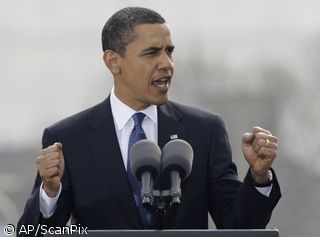 Challenging a long-standing taboo, U.S. President Barack Obama made a pledge to end restrictions on gays in the U.S. military.
more »
Challenging a long-standing taboo, U.S. President Barack Obama made a pledge to end restrictions on gays in the U.S. military.
more »
 The economic crisis has pushed an extra 90 million people into extreme poverty in the developing world and made 23 million people unemployed.
more »
The economic crisis has pushed an extra 90 million people into extreme poverty in the developing world and made 23 million people unemployed.
more »
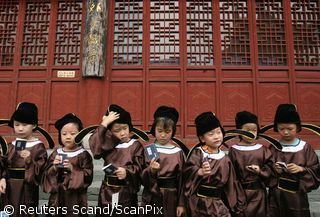 In the Chinese capital where the nation's one-child limit is rigidly enforced twins, triplets and quads get together to celebrate the fact they have brothers and sisters.
more »
In the Chinese capital where the nation's one-child limit is rigidly enforced twins, triplets and quads get together to celebrate the fact they have brothers and sisters.
more »
 It's called the Brompton folding bike world championships but it really is an awfully British affair.
more »
It's called the Brompton folding bike world championships but it really is an awfully British affair.
more »