A discussion is under way inside the European Union as to how many years are required before its new members will match the living standards prevailing in the rest of the now 25-nation EU
Published:
12 August 2004 y., Thursday
A discussion is under way inside the European Union as to how many years are required before its new members will match the living standards prevailing in the rest of the now 25-nation EU. Many economists predict that even those new members that have relatively strong economies will require at least 30 years to reach the per-capita income levels prevailing in Western Europe.
Of the new EU members, Slovakia and three Baltic states are generally considered to be the fastest-growing economically. Each of them aspire to match the achievement of one of the oldest members of the EU, Ireland, which in the 1990s registered economic growth rates averaging over eight percent.
Willem Buiter, chief economist at the European Bank for Reconstruction and Development in London, says Ireland is a worthy model for the new EU members.
"Ireland has done it. From being a poor west European country they are now a rich west European country, richer than the average west European country and richer even than Britain," he said. "But they had a number of factors working for them that are not present in Eastern Europe, the main thing being the demographics."
Barbara Boettcher, an economist at Deutsche Bank in Frankfurt, agrees that the Ireland model won't be easy to emulate.
"You won't see that in Eastern Europe," she said. "Eastern European countries, which are designed to be winners are those that have attracted a large share of the production oriented foreign direct investment, like Slovakia, Hungary and the Czech Republic have done."
Šaltinis:
voanews.com
Copying, publishing, announcing any information from the News.lt portal without written permission of News.lt editorial office is prohibited.
The most popular articles
 'Play to Stop – Europe for climate' – a campaign giving young Europeans a chance to learn and talk about climate change and the environment.
more »
'Play to Stop – Europe for climate' – a campaign giving young Europeans a chance to learn and talk about climate change and the environment.
more »
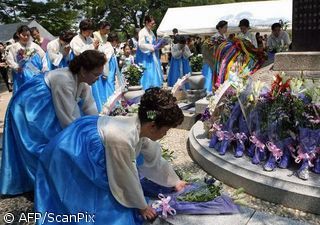 The Japanese city of Hiroshima held its annual peace memorial ceremony Thursday to remember the first atomic bomb ever used against human beings on the day 64 years ago.
more »
The Japanese city of Hiroshima held its annual peace memorial ceremony Thursday to remember the first atomic bomb ever used against human beings on the day 64 years ago.
more »
 Surfers attacked by sharks - a typical summer headline, in some parts of the world. But really it's the sharks who need protecting - over a third of all shark species living in the open seas are threatened with extinction.
more »
Surfers attacked by sharks - a typical summer headline, in some parts of the world. But really it's the sharks who need protecting - over a third of all shark species living in the open seas are threatened with extinction.
more »
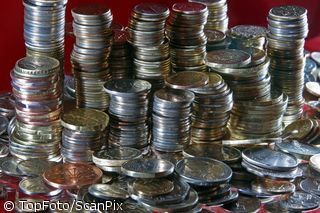 Lottery fever is sweeping Italy ahead of Tuesday's night's record draw.
more »
Lottery fever is sweeping Italy ahead of Tuesday's night's record draw.
more »
 The Sudanese women are protesting Lubna Hussein's sentence of 40 lashes for the crime of wearing trousers in public.
more »
The Sudanese women are protesting Lubna Hussein's sentence of 40 lashes for the crime of wearing trousers in public.
more »
 On August 4–6 Lithuanian, Latvian and Estonian members of the Baltic Battalion staff will exercise in the Lithuanian Grand Duke Algirdas Mechanised Infantry Battalion (Rukla, Jonava Distr.).
more »
On August 4–6 Lithuanian, Latvian and Estonian members of the Baltic Battalion staff will exercise in the Lithuanian Grand Duke Algirdas Mechanised Infantry Battalion (Rukla, Jonava Distr.).
more »
 Mobile exposition of needleworks of Afghan women, artefacts found by Lithuanian archaeologists in Ghowr and photo and video material produced by the Lithuanian-led PRT will be displayed in the major cities of Lithuania.
more »
Mobile exposition of needleworks of Afghan women, artefacts found by Lithuanian archaeologists in Ghowr and photo and video material produced by the Lithuanian-led PRT will be displayed in the major cities of Lithuania.
more »
 The killing of two teenagers by a gunman who opened fire on a gay meeting in Tel Aviv has shocked many Israelis.
more »
The killing of two teenagers by a gunman who opened fire on a gay meeting in Tel Aviv has shocked many Israelis.
more »
 Missing luggage still a big headache for passengers in Europe.
more »
Missing luggage still a big headache for passengers in Europe.
more »
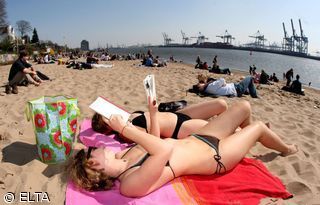 As Europeans hit the beaches in large numbers this summer the risk of skin disease is present if people expose them to too much sun and don't use adequate protection.
more »
As Europeans hit the beaches in large numbers this summer the risk of skin disease is present if people expose them to too much sun and don't use adequate protection.
more »