Independent journalists and international human rights organizations are concerned about the future of free-press development in Kazakhstan
Published:
20 January 2004 y., Tuesday
Independent journalists and international human rights organizations are concerned about the future of free-press development in Kazakhstan, citing pending media legislation that would effectively give the government the ability to meddle in the operations of news-gathering organizations.
A clear majority in Kazakhstan's lower house of parliament, or Mazhilis, passed the media bill on December 25. Free-speech advocates believe the upper house, or Senate, will approve the bill as early as in mid-February. "We have no hope in the Senate, and [only] a very small hope that the president will reconsider and not sign this draft law," said Irina Petrushova, editor of the opposition Assandi Times newspaper.
Under the law, the Ministry of Information Affairs would have nearly unlimited powers to suspend a media organization's operations. The law places no restrictions on monopolies, and does little to guarantee journalists' rights. The law vaguely states that journalists have a right to gather information. At the same time, the legislation mandates that media organizations perform certain functions as defined by the Ministry of Information - a requirement that critics fear could be used to deny registration to media outlets that anger the government.
Petrushova, one of the bill's most outspoken critics, said the Western reaction to the media bill could play a pivotal role in its future. An outcry against the law by Western government and non-governmental groups could pressure Kazakhstani President Nursultan Nazarbayev not to sign the restrictive legislation. The Assandi Times has already published two so-called "protest editions" with statements from international organizations such as Reporters Without Borders and the World Association of Newspapers that criticize the draft law. The newspaper plans to release additional special editions in January to draw fresh international attention to the legislation. But, so far, such criticism appears to have had little effect.
Šaltinis:
EurasiaNet
Copying, publishing, announcing any information from the News.lt portal without written permission of News.lt editorial office is prohibited.
The most popular articles
 From Luis Figo to David Villa footballers are urging people to vote in the European elections this week.
more »
From Luis Figo to David Villa footballers are urging people to vote in the European elections this week.
more »
 To celebrate European Neighbours Day, a new photo exhibition entitled Images from Slovenia and Ireland went on display this week at the European Commission Representation in Ireland.
more »
To celebrate European Neighbours Day, a new photo exhibition entitled Images from Slovenia and Ireland went on display this week at the European Commission Representation in Ireland.
more »
 This is a tarsier monkey. It's one of the smallest on earth and is only found in South East Asia.
But now the tarsier is the brink of extinction in Indonesia's Sulawesi Island.
more »
This is a tarsier monkey. It's one of the smallest on earth and is only found in South East Asia.
But now the tarsier is the brink of extinction in Indonesia's Sulawesi Island.
more »
 On 31 May, three new TV spots will be shown on over 100 TV channels across Europe for one month and repeated during the month of September.
more »
On 31 May, three new TV spots will be shown on over 100 TV channels across Europe for one month and repeated during the month of September.
more »
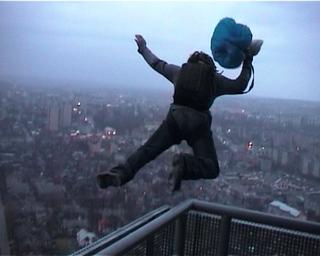 Haizhu Bridge in China's southern city of Guangzhou has become a popular venue for those attempting suicide. Chen Fuchao was at least the 12th person since last month threatening to jump.
more »
Haizhu Bridge in China's southern city of Guangzhou has become a popular venue for those attempting suicide. Chen Fuchao was at least the 12th person since last month threatening to jump.
more »
 Crowds gathered outside California's Supreme Court as it upheld a controversial ban on gay marriage, known as Proposition 8.
more »
Crowds gathered outside California's Supreme Court as it upheld a controversial ban on gay marriage, known as Proposition 8.
more »
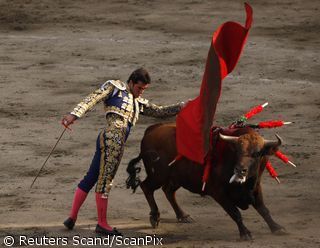 Hundreds of demonstrators stripped off to protest against Spain's second biggest mass spectacle after soccer.
more »
Hundreds of demonstrators stripped off to protest against Spain's second biggest mass spectacle after soccer.
more »
 70-year-old Ruddha shows off her wounds, her crime - being a witch...
more »
70-year-old Ruddha shows off her wounds, her crime - being a witch...
more »
 Police are intensifying their search for a 13-year old boy with cancer and his mother from Minnesota.
more »
Police are intensifying their search for a 13-year old boy with cancer and his mother from Minnesota.
more »
 One fifth of Europe’s reptiles and nearly a quarter of its amphibians are threatened, according to new studies commissioned by the European Commission and carried out by IUCN.
more »
One fifth of Europe’s reptiles and nearly a quarter of its amphibians are threatened, according to new studies commissioned by the European Commission and carried out by IUCN.
more »