Independent journalists and international human rights organizations are concerned about the future of free-press development in Kazakhstan
Published:
20 January 2004 y., Tuesday
Independent journalists and international human rights organizations are concerned about the future of free-press development in Kazakhstan, citing pending media legislation that would effectively give the government the ability to meddle in the operations of news-gathering organizations.
A clear majority in Kazakhstan's lower house of parliament, or Mazhilis, passed the media bill on December 25. Free-speech advocates believe the upper house, or Senate, will approve the bill as early as in mid-February. "We have no hope in the Senate, and [only] a very small hope that the president will reconsider and not sign this draft law," said Irina Petrushova, editor of the opposition Assandi Times newspaper.
Under the law, the Ministry of Information Affairs would have nearly unlimited powers to suspend a media organization's operations. The law places no restrictions on monopolies, and does little to guarantee journalists' rights. The law vaguely states that journalists have a right to gather information. At the same time, the legislation mandates that media organizations perform certain functions as defined by the Ministry of Information - a requirement that critics fear could be used to deny registration to media outlets that anger the government.
Petrushova, one of the bill's most outspoken critics, said the Western reaction to the media bill could play a pivotal role in its future. An outcry against the law by Western government and non-governmental groups could pressure Kazakhstani President Nursultan Nazarbayev not to sign the restrictive legislation. The Assandi Times has already published two so-called "protest editions" with statements from international organizations such as Reporters Without Borders and the World Association of Newspapers that criticize the draft law. The newspaper plans to release additional special editions in January to draw fresh international attention to the legislation. But, so far, such criticism appears to have had little effect.
Šaltinis:
EurasiaNet
Copying, publishing, announcing any information from the News.lt portal without written permission of News.lt editorial office is prohibited.
The most popular articles
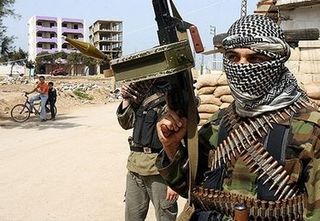 Since 9/11, and with the terrorist attacks in Madrid in 2004 and in London in 2005, security has become a top priority for the EU.
more »
Since 9/11, and with the terrorist attacks in Madrid in 2004 and in London in 2005, security has become a top priority for the EU.
more »
 Obama made a "joke" about his bowling skills being bad, comparing it to the Special Olympics.
more »
Obama made a "joke" about his bowling skills being bad, comparing it to the Special Olympics.
more »
 Energy policy and climate change have raced up the political agenda in the last few years.
more »
Energy policy and climate change have raced up the political agenda in the last few years.
more »
 A desolate planet where the most prized asset is water - that is the scenario in Frank Herbert's science fiction novel “Dune”.
more »
A desolate planet where the most prized asset is water - that is the scenario in Frank Herbert's science fiction novel “Dune”.
more »
 More than 600 people turned out for London's first verticle rush. Winner took just four minutes and 57 seconds to get from bottom to top – 920 steps.
more »
More than 600 people turned out for London's first verticle rush. Winner took just four minutes and 57 seconds to get from bottom to top – 920 steps.
more »
 In an ideal world, the consumer would be king. Today's consumer is alas often a victim - left feeling helpless and frustrated.
more »
In an ideal world, the consumer would be king. Today's consumer is alas often a victim - left feeling helpless and frustrated.
more »
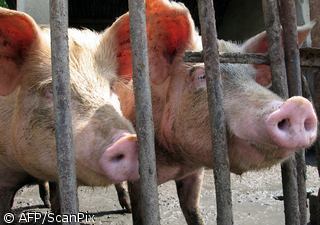 China arrested fifteen people for selling pigs fed with banned growth chemicals, which sickened 70 people in the country's southern Guangdong province.
more »
China arrested fifteen people for selling pigs fed with banned growth chemicals, which sickened 70 people in the country's southern Guangdong province.
more »
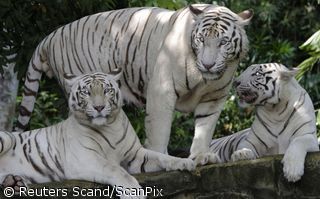 China offers Magnificent white tigers to a city in Taiwan as an act of goodwill.
more »
China offers Magnificent white tigers to a city in Taiwan as an act of goodwill.
more »
 Europe's estimated 10-12 million Roma are its largest minority and most of them live in abject poverty.
more »
Europe's estimated 10-12 million Roma are its largest minority and most of them live in abject poverty.
more »
 To boost sales, the Czech Republic lunar embassy has cut prices down by 20 percent, offering land patches for 799 Czech Crowns (39 U.S. dollars).
more »
To boost sales, the Czech Republic lunar embassy has cut prices down by 20 percent, offering land patches for 799 Czech Crowns (39 U.S. dollars).
more »