Independent journalists and international human rights organizations are concerned about the future of free-press development in Kazakhstan
Published:
20 January 2004 y., Tuesday
Independent journalists and international human rights organizations are concerned about the future of free-press development in Kazakhstan, citing pending media legislation that would effectively give the government the ability to meddle in the operations of news-gathering organizations.
A clear majority in Kazakhstan's lower house of parliament, or Mazhilis, passed the media bill on December 25. Free-speech advocates believe the upper house, or Senate, will approve the bill as early as in mid-February. "We have no hope in the Senate, and [only] a very small hope that the president will reconsider and not sign this draft law," said Irina Petrushova, editor of the opposition Assandi Times newspaper.
Under the law, the Ministry of Information Affairs would have nearly unlimited powers to suspend a media organization's operations. The law places no restrictions on monopolies, and does little to guarantee journalists' rights. The law vaguely states that journalists have a right to gather information. At the same time, the legislation mandates that media organizations perform certain functions as defined by the Ministry of Information - a requirement that critics fear could be used to deny registration to media outlets that anger the government.
Petrushova, one of the bill's most outspoken critics, said the Western reaction to the media bill could play a pivotal role in its future. An outcry against the law by Western government and non-governmental groups could pressure Kazakhstani President Nursultan Nazarbayev not to sign the restrictive legislation. The Assandi Times has already published two so-called "protest editions" with statements from international organizations such as Reporters Without Borders and the World Association of Newspapers that criticize the draft law. The newspaper plans to release additional special editions in January to draw fresh international attention to the legislation. But, so far, such criticism appears to have had little effect.
Šaltinis:
EurasiaNet
Copying, publishing, announcing any information from the News.lt portal without written permission of News.lt editorial office is prohibited.
The most popular articles
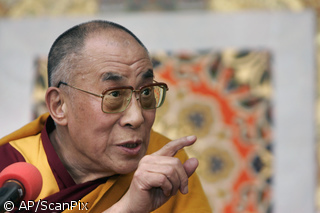 It's 50 years since Tibetan spiritual leader the Dalai Lama fled here from Tibet in 1959 after a failed uprising against Chinese rule.
more »
It's 50 years since Tibetan spiritual leader the Dalai Lama fled here from Tibet in 1959 after a failed uprising against Chinese rule.
more »
 Women across the EU earn on average 17.4% less than men, according to new EU statistics, released as part of a commission campaign to narrow the pay gap between the sexes.
more »
Women across the EU earn on average 17.4% less than men, according to new EU statistics, released as part of a commission campaign to narrow the pay gap between the sexes.
more »
 It's 1941 and the height of WWII. Amid all the suffering, a couple of Italians imprisoned for anti-fascism sketched out a vision of how post-war Europe could look on cigarette papers.
more »
It's 1941 and the height of WWII. Amid all the suffering, a couple of Italians imprisoned for anti-fascism sketched out a vision of how post-war Europe could look on cigarette papers.
more »
 Kenya's president Mwai Kibaki denies press accusations that he has a second wife.
more »
Kenya's president Mwai Kibaki denies press accusations that he has a second wife.
more »
 In the last 30 years the European Union has striven to seek gender equality in all aspects of its work.
more »
In the last 30 years the European Union has striven to seek gender equality in all aspects of its work.
more »
 Proposals to boost shopper's confidence on the high street and the internet will be opened to public debate by MEPs Monday afternoon.
more »
Proposals to boost shopper's confidence on the high street and the internet will be opened to public debate by MEPs Monday afternoon.
more »
 How the EU promotes creativity and innovation – 20 projects showcased in Brussels
more »
How the EU promotes creativity and innovation – 20 projects showcased in Brussels
more »
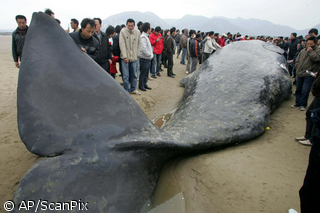 A desperate battle to save the lives of hundreds of pilot whales beached on an island off Tasmania.
more »
A desperate battle to save the lives of hundreds of pilot whales beached on an island off Tasmania.
more »
 Four year old Krishna Goraik‘s family refuse to arrange his funeral because child‘s mother believes by offering prayers he will come back to life after seven days.
more »
Four year old Krishna Goraik‘s family refuse to arrange his funeral because child‘s mother believes by offering prayers he will come back to life after seven days.
more »
 Leading MEPs have joined Nicole Kidman and the UN in the “Say NO to violence against women” campaign.
more »
Leading MEPs have joined Nicole Kidman and the UN in the “Say NO to violence against women” campaign.
more »