Independent journalists and international human rights organizations are concerned about the future of free-press development in Kazakhstan
Published:
20 January 2004 y., Tuesday
Independent journalists and international human rights organizations are concerned about the future of free-press development in Kazakhstan, citing pending media legislation that would effectively give the government the ability to meddle in the operations of news-gathering organizations.
A clear majority in Kazakhstan's lower house of parliament, or Mazhilis, passed the media bill on December 25. Free-speech advocates believe the upper house, or Senate, will approve the bill as early as in mid-February. "We have no hope in the Senate, and [only] a very small hope that the president will reconsider and not sign this draft law," said Irina Petrushova, editor of the opposition Assandi Times newspaper.
Under the law, the Ministry of Information Affairs would have nearly unlimited powers to suspend a media organization's operations. The law places no restrictions on monopolies, and does little to guarantee journalists' rights. The law vaguely states that journalists have a right to gather information. At the same time, the legislation mandates that media organizations perform certain functions as defined by the Ministry of Information - a requirement that critics fear could be used to deny registration to media outlets that anger the government.
Petrushova, one of the bill's most outspoken critics, said the Western reaction to the media bill could play a pivotal role in its future. An outcry against the law by Western government and non-governmental groups could pressure Kazakhstani President Nursultan Nazarbayev not to sign the restrictive legislation. The Assandi Times has already published two so-called "protest editions" with statements from international organizations such as Reporters Without Borders and the World Association of Newspapers that criticize the draft law. The newspaper plans to release additional special editions in January to draw fresh international attention to the legislation. But, so far, such criticism appears to have had little effect.
Šaltinis:
EurasiaNet
Copying, publishing, announcing any information from the News.lt portal without written permission of News.lt editorial office is prohibited.
The most popular articles
 For the last 15 years European citizens living in another European country have been able to vote in that country's local and European elections.
more »
For the last 15 years European citizens living in another European country have been able to vote in that country's local and European elections.
more »
 Zimbabwe is suffering from cholera.
more »
Zimbabwe is suffering from cholera.
more »
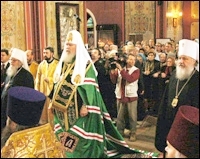 Metropolitan Kirill will head the Russian Orthodox Church temporarily following the death of Patriarch Alexiy II on Friday.
more »
Metropolitan Kirill will head the Russian Orthodox Church temporarily following the death of Patriarch Alexiy II on Friday.
more »
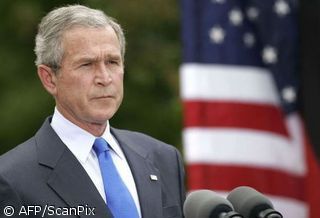 U.S President George W. Bush celebrates his final Christmas in office - the lighting of the National Christmas tree.
more »
U.S President George W. Bush celebrates his final Christmas in office - the lighting of the National Christmas tree.
more »
 Under new draft laws, people travelling by bus and ship would enjoy the same rights as those taking a plane or train, including the right to meals, hotel accommodation and alternative services if the trip is cancelled or interrupted.
more »
Under new draft laws, people travelling by bus and ship would enjoy the same rights as those taking a plane or train, including the right to meals, hotel accommodation and alternative services if the trip is cancelled or interrupted.
more »
 The importance of individual happiness, which can be achieved with the help of universal human values - whether religious or non-religious - was one major theme in an address by the 14th Dalai Lama to the European Parliament on Wednesday.
more »
The importance of individual happiness, which can be achieved with the help of universal human values - whether religious or non-religious - was one major theme in an address by the 14th Dalai Lama to the European Parliament on Wednesday.
more »
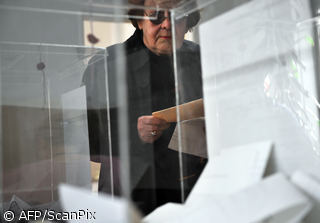 Although the European Parliament is now much more powerful than when it was first directly elected in 1979, voter turnout for elections has declined steadily, reaching a new low in 2004.
more »
Although the European Parliament is now much more powerful than when it was first directly elected in 1979, voter turnout for elections has declined steadily, reaching a new low in 2004.
more »
 The free tours are run by Sandemans New Europe - set up in 2004 by Chris Sandeman, who chose tourism over his family's traditional sherry business.
more »
The free tours are run by Sandemans New Europe - set up in 2004 by Chris Sandeman, who chose tourism over his family's traditional sherry business.
more »
 Eighteen months after it began work, Parliament's Temporary Committee on Climate Change called for an 80% cut in greenhouse gases by 2050, binding interim targets to improve energy efficiency 20% by 2020 and incentives to encourage everyone to do their bit.
more »
Eighteen months after it began work, Parliament's Temporary Committee on Climate Change called for an 80% cut in greenhouse gases by 2050, binding interim targets to improve energy efficiency 20% by 2020 and incentives to encourage everyone to do their bit.
more »
 Israeli experts are using good old mathematical models to give a face in a photo the ideal characteristics in just a few mouse clicks.
more »
Israeli experts are using good old mathematical models to give a face in a photo the ideal characteristics in just a few mouse clicks.
more »