Payment cards, electronic payments, and online services have become a reality not only in financial but also in social, utilities, and other spheres. Many countries strive for a new reality in which there are no coins or bills. Swedish churches already accept donations electronically, and China has more than five bankcards per person. Various factors affect the speed of the cash refusal: the emergence of new convenient and safe solutions, the development of innovative technologies, and even such extraordinary circumstances as the COVID-19 pandemic.
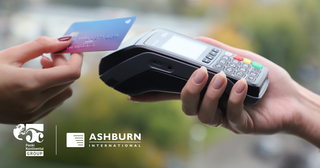
Payment cards, electronic payments, and online services have become a reality not only in financial but also in social, utilities, and other spheres. Many countries strive for a new reality in which there are no coins or bills. Swedish churches already accept donations electronically, and China has more than five bankcards per person. Various factors affect the speed of the cash refusal: the emergence of new convenient and safe solutions, the development of innovative technologies, and even such extraordinary circumstances as the COVID-19 pandemic.
Consulting company Boston Consulting Group (BCG) together with the international system SWIFT published the report “Global Payments 2020: Fast Forward into the Future.” This research focuses on the current state of the payments market. It notes that the COVID-19 pandemic has accelerated the transition to cashless payments. According to analysts, the use of paper money fell by 48%. The leading positions in the ranking of countries that abandoned cash in favor of non-cash payments were taken by the United Kingdom (-62%), Canada (-59%), Australia (-53%), Russia and Romania (-48%), the Netherlands (-47%).
Experts’ forecast suggests that payments revenues globally could soar to $1.8 trillion by 2024, in a fast recovery scenario. This brings the compound annual growth rate to 4.4%. Among the positive trends of 2020, experts noted the continued transition away from cash, sustained strong growth in e-commerce and e-wallets, and B2B payment automation.
Situation in Lithuania
In Lithuania, even before the quarantine, the number of non-cash payments was constantly growing. According to the Bank of Lithuania, last year, 233 digital payment transactions were made per person in the country. It is 30 more than in 2018. Amid the pandemic, payment service providers quickly reacted to the quarantine restrictions: they changed the customer service system and increased the limit for contactless card payments to 50 euros.
In the second quarter of 2020, the number of online payments increased by 125% compared to the corresponding period last year. Residents began to use electronic banking 51% more often.
According to the Lithuanian Banks Association (LBA), 2 billion euros were withdrawn from ATMs (20% less than in 2019). This is not only due to the growing popularity of digital payments but also to the coronavirus pandemic.
Market adaptation
What determines the frequency of using non-cash money? According to Dainius Einoris, Head of the PSP department at ASHBURN International, a part of Penki Kontinentai Group, first, from the transaction amount, characteristics of points of sale, commission, as well as the ability to pay with one or another payment instrument.
“Cashless payment is one of the most convenient payment methods. For effective business, almost all retailers connect the acquiring service to provide customers with the opportunity to pay for purchases by card. A contactless payment without entering a PIN code takes no more than 10 seconds, which is much faster than paying in cash. The cashier does not need to check the banknotes for authenticity, count the received money, and issue change,” says the representative for ASHBURN International.
The payments space is overcrowded today. Non-traditional players battle banks and payment service providers for customers. The impending crisis is forcing companies to accelerate digitalization and manage risk in new ways. The winners will be those who use this time to reboot. The pandemic opens up new opportunities for companies to outrun the competition, scale-up, and change the daily lives of consumers.