PayTaxi payment and loyalty solution for taxi cars

Published: 9 October 2015 y., Friday

ASHBURN International, UAB, (ASHBURN) has adapted the usual payment card technology for taxi companies and developed a PayTaxi payment and loyalty solution. In early September, it was launched with A2B taxi cars of Amber Vilnius, UAB.
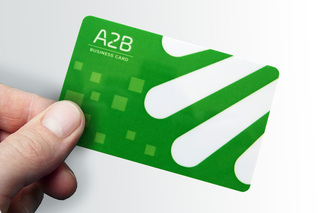
After the installation of payment terminals with the PayTaxi solution, customers are able to pay for their ride using disposable, reusable or prepaid cards made specially for them and containing a predefined amount of money. The customer has to swipe the card through the payment terminal and enter his/her PIN code, thereby paying for the ride. At the end of the month, he/she shall receive an invoice for the services. Design and number of cards as well as the amount of money held in the card account are agreed on individually in every given case.

According to Tomas Peleckas, Head of Amber Vilnius, UAB, the new system has successfully replaced paper checks that are still used for the business. “We believe that paper checks are an inconvenient and outdated payment method; the customers are forced to always carry paper checks with them, store them, fill them in manually and calculate travel expenses at the end of the month. This task is entrusted to administrators who could use this time way more efficiently.  The new solution enables us to issue invoices accompanied by detailed reports on card transactions, which facilitates accounting significantly”, explained T. Peleckas.

The taxi company also receives detailed reports on payments and has the opportunity to monitor and administer payments in real time. If necessary, additional reports – both technical and financial – can be drawn up.

All payment cards are assigned a unique number and a PIN code, thus it is impossible to tamper with the data and accounting becomes highly accurate. The solution fully meets the requirements of an international Payment Card Industry Data Security Standard (PCI DSS), which ensures maximum security of the card data. Card holders can also accumulate points, get discounts and pay for third-party services, all of which promotes customer loyalty.

The new solution is easy to adapt for other services sectors, for example, catering establishments, gas-stations, hotels, etc.

Šaltinis: penki.lt
Copying, publishing, announcing any information from the News.lt portal without written permission of News.lt editorial office is prohibited.

Facebook Comments

New comment


Captcha

Hindsight: From Ritty's Incorruptible Cashier to Self-Checkout

November 4, 1879, is the birthday of the cash register. Today it is impossible to imagine modern trade without the use of cash registers. They are everywhere: in shops, cafes, and post offices. Who came up with the idea to keep track of cash using the cash register? more »

Vynamic Marketing. How to attract new customers and personalize ads using ATMs

Restrictive measures related to the spread of the COVID-19 pandemic have changed the way banks serve their customers. ATMs and other terminal devices have become a real alternative to traditional service in bank branches. more »

Fiber-Optic Internet Penki Will Celebrate its 22nd Birthday

In Lithuania, the era of fiber-optic Internet began on October 28, 1998, when Penkių kontinentų komunikacijų centras, a member of the Penki Kontinentai Group, for the first time in Lithuania offered its customers the fastest fiber-optic Internet. So this day, we will celebrate the birthday of the Penki network, but also the fiber-optic Internet in Lithuania! more »

COVID-19 Has Been Diagnosed To Five Employees of BS/2

Five COVID-19 cases have been identified in Penkių kontinentų bankinės technologijos, a company belonging to the Penki Kontinentai Group. more »

Digital Payments Accelerated with Covid-19 Pandemic

Payment cards, electronic payments, and online services have become a reality not only in financial but also in social, utilities, and other spheres. Many countries strive for a new reality in which there are no coins or bills. Swedish churches already accept donations electronically, and China has more than five bankcards per person. Various factors affect the speed of the cash refusal: the emergence of new convenient and safe solutions, the development of innovative technologies, and even such extraordinary circumstances as the COVID-19 pandemic. more »

Traditional Victory of SEB at the BFI Cup Tournament

The tennis tournament, which took place in the Vilnius sports complex SEB Arena on October 10-11, was traditionally held with the support of Penkių kontinentų bankinės technologijos (BS/2), owned by Penki Kontinentai. more »

The World Invests in Cryptocurrency ATMs: What's New?

The total number of devices worldwide has already exceeded 10,000 according to the Coin ATM Radar. The first Bitcoin ATM was installed seven years ago in Vancouver. As stated by the Norwegian financial company AksjeBloggen, the number of crypto ATMs grew by 167 percent over the year. more »

ASHBURN International Forges Partnerships With Online Banks

ASHBURN International has signed a payment service agreement with Travel Union, the travel-focused digital banking platform for individuals, families, and travel industry partners. The company will provide a range of services for the development of payment acquiring infrastructure. more »

BS/2 expands cooperation with the Halyk Group

Financial institutions in Central Asia actively invest in banking equipment. The strategy of the Halyk Group is focused on the introduction of high-tech products and services. One of the priorities of Group's banks is the development of a self-service banking channel, which led to the increased interest in cash recycling ATM and specialized software that expands the functionality of devices. more »

5 ATM Fleet Management Tools to Improve Your Bank's Operational Efficiency

The number of ATMs continues to increase in most countries of Eastern Europe and Central Asia. In 2020 this number increased by almost 10% in Georgia and Azerbaijan and more than 20% in Uzbekistan. It means that along with the rapid development of online banking and mobile services, financial institutions continue to rely on self-service devices. more »